Your mix is balanced and clean, but it still sounds like a folder of separate tracks instead of one finished record.
You know a bus compressor is the tool that fixes this.
The problem is that every forum thread, every YouTube video, and every plugin sale points you at a different one, and they range from free to the price of a real interface.
The good news: most of them are excellent, and the one that is right for you depends on a few simple factors.
This post breaks down seven of the best mix bus compressor plugins across every budget, what each one is genuinely good at, and how to pick the right one without spending money you do not need to.
TL;DR
- Best all-rounder: FabFilter Pro-C 2. Clean and flexible, with a dedicated Bus mode and the clearest metering for learning compression.
- Best classic glue: an SSL G-Bus Compressor emulation. The sound on countless commercial records.
- Best for punch: API 2500, thanks to its “Thrust” sidechain filter that keeps the low end from pumping.
- Best on a budget: Cytomic The Glue and Klanghelm MJUC both deliver pro results for a fraction of the cost.
Keep reading for the full breakdown of all seven picks, an at-a-glance comparison table, and how to choose the one that fits your mixes.
What Makes a Good Mix Bus Compressor
A mix bus compressor has a narrow job: gentle, cohesive glue across the whole mix, usually only 1 to 3 dB of gain reduction.
That job shapes what you should look for. You are not buying a problem-solver for a single track.
You are buying a finishing tool.
Three things separate a good one from the rest.
Compressor type sets the character: VCA designs are punchy and precise, vari-mu (tube) designs are warm and forgiving, and clean digital designs are transparent and flexible.
Low ratios matter because a bus compressor lives at 1.5:1 and 2:1, so a unit with gentle ratios and a soft knee is built for the task.
A sidechain filter is the feature that earns its keep, because filtering bass out of the detection signal stops a loud kick from ducking the entire mix.
The table below sums up all seven picks against those factors, so you can scan for the one that fits before reading the detail.
| Plugin | Type | Best for | Budget tier |
|---|---|---|---|
| FabFilter Pro-C 2 | Clean digital | All-round versatility | Mid |
| SSL G-Bus Compressor | VCA | Classic console glue | Mid |
| API 2500 | VCA | Punch and impact | Premium |
| Cytomic The Glue | VCA (SSL-style) | Affordable glue | Budget |
| Klanghelm MJUC | Vari-mu | Warm character on a budget | Budget |
| Brainworx Vertigo VSC-2 | VCA (quad) | Premium boutique character | Premium |
| TDR Kotelnikov | Clean digital | Transparent, free option | Free / budget |
FabFilter Pro-C 2: Best All-Rounder
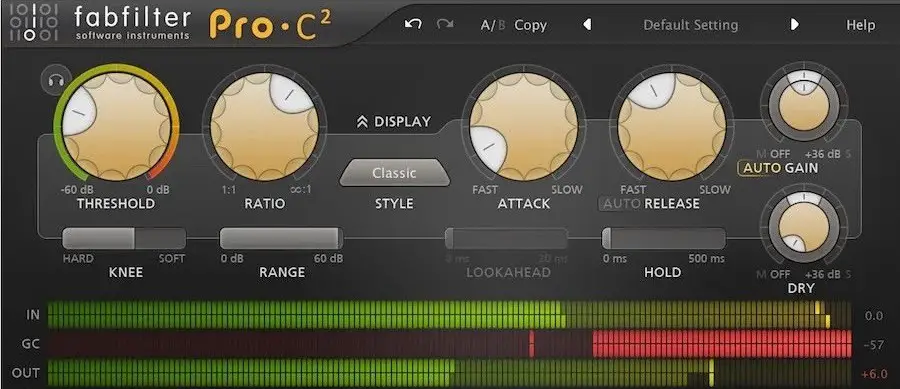
If you only buy one compressor, this is the safe call.
Pro-C 2 is a clean, modern digital compressor with several compression styles built in, including a dedicated Bus mode tuned for exactly this job.
It is transparent by default and only adds color if you ask it to.
Its real strength for a developing engineer is the metering.
The interface shows you the gain reduction curve in real time, so you actually see what your attack, release, and ratio are doing to the signal.
It also has a deep sidechain filtering section. For glue duty, set it to Bus mode, keep the ratio low, and aim for 1 to 3 dB.
It will not be the most characterful pick here, but it will never be the wrong one.
Not sure how much glue your mix actually needs? Drop your WAV or MP3 into the Compression Analyzer.
SSL G-Bus Compressor: Best Classic Glue
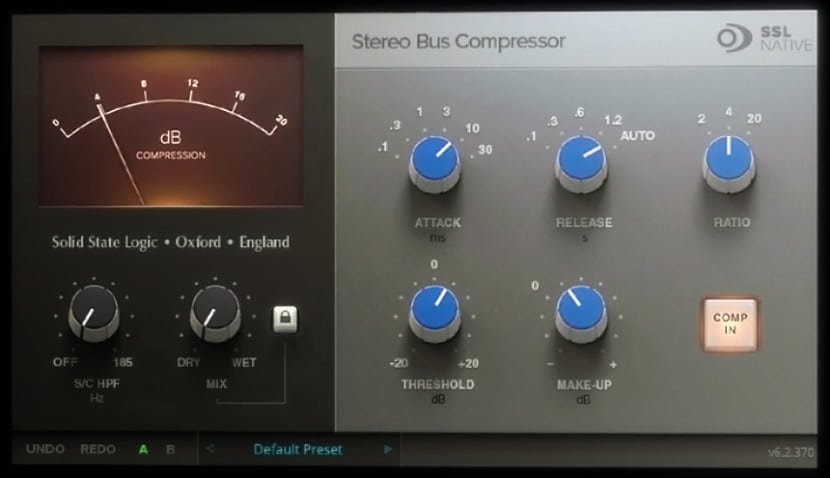
The bus compressor from the SSL 4000 G console is the sound of modern records.
When producers say a mix needs “glue,” this VCA compressor is the tool that defined what that word means.
Countless commercial mixes across pop, rock, and electronic music ran through one.
It is simple by design: stepped controls, low ratios of 2:1, 4:1, and 10:1, and a characterful, slightly aggressive glue that pulls a mix together fast.
SSL makes an official native plugin version, and trusted emulations exist from Waves and others.
Set it to 2:1, a slow attack, an auto release, and a chase of 1 to 3 dB. It is the default choice for a reason.
API 2500: Best for Punch

Where the SSL glues, the API 2500 hits.
This VCA compressor is built for impact, and it is the pick when you want a mix that feels bigger and more aggressive, especially on drum-driven rock and hip-hop.
Its signature feature is the Thrust sidechain filter.
Thrust removes low frequencies from the detection signal, so a loud kick drum does not trigger the compressor and duck the whole mix.
The result is heavy compression that keeps its low-end punch instead of pumping.
The 2500 also offers feedforward and feedback detection modes and “old” and “new” curves, giving you real tonal range.
It is a premium pick, but for punch, it is hard to beat.
Cytomic The Glue: Best Affordable Glue
If the SSL sound is what you want but the price is not, The Glue is the answer.
It is an SSL-style bus compressor modeled with care, and it is a fraction of the cost of the name-brand options.
It covers the essentials properly: low ratios, a useful range of attack and release times, a sidechain high-pass filter, and a clean, no-nonsense interface.
It has been a staple in Ableton Live producers’ chains for years because it simply works.
For most home and project studios, The Glue delivers 95 percent of the classic console-glue sound for a small outlay, which makes it one of the smartest buys on this list.
Klanghelm MJUC: Best Warm Character on a Budget
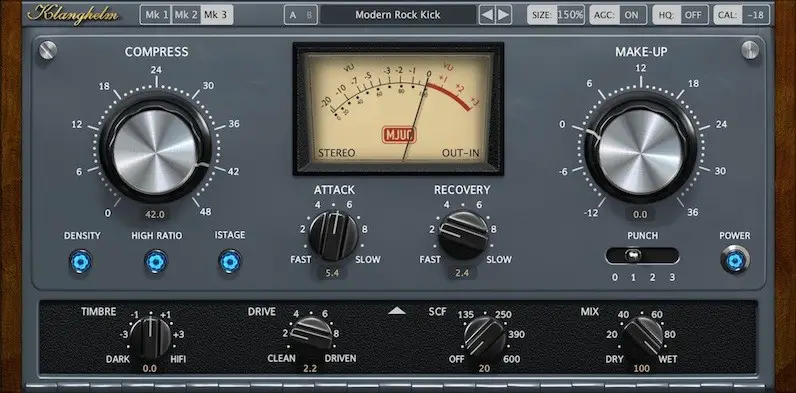
Not every mix wants the precise VCA punch of an SSL or API.
Some want warmth, weight, and a gentle, forgiving hand.
That is vari-mu territory, the tube-style compression behind classic vintage units, and MJUC delivers it for very little money.
MJUC offers three models spanning different eras of vari-mu design, from a thick vintage character to a cleaner modern one.
On the mix bus it adds a smooth density and a pleasing analog color that flatters a mix rather than just controlling it.
For a producer who wants the warm, glued, slightly vintage sound without a premium price, MJUC is an easy recommendation.
Brainworx Vertigo VSC-2: Best Boutique Character

The Vertigo VSC-2 is a boutique quad-VCA compressor with a devoted following among mastering and mix engineers.
Brainworx models the hardware closely, and the plugin carries the original’s reputation for being musical and easy to use on a full mix.
What makes it special is how natural it sounds while still adding character.
It glues and adds a subtle richness without the obvious grab some compressors have, which is why it is a favorite for bus and master duties.
Brainworx also adds its own extras like a tolerance modeling control.
It is a premium pick, best suited to an engineer who already knows the basic compressors and wants a refined, slightly upscale option.
TDR Kotelnikov: Best Transparent and Free Option
Tokyo Dawn Labs’ Kotelnikov is proof that you do not need to spend a cent to get a serious bus compressor.
The standard version is free, and it is genuinely mastering-grade, not a stripped-down demo.
Kotelnikov is a clean, wideband compressor designed to be transparent, with independent release controls for peak and RMS content that let it handle complex full-mix material gracefully.
There is a paid GE version with extra features, but the free one is more than enough for excellent bus compression.
If your budget is zero, start here and you will not feel like you settled.
How to Pick the Right One for You
Seven good options can be paralyzing, so narrow it down with three questions.
The honest answer to each one points you straight at a pick, and there is no wrong choice here, only a best-fit one.
- Spending nothing? Download TDR Kotelnikov. It is free and genuinely good enough to keep forever.
- Want one plugin to learn on? FabFilter Pro-C 2. Its visual feedback teaches you compression as you use it.
- Chasing the classic record sound? An SSL G-Bus emulation for the name, or Cytomic The Glue for the same character at a lower price.
- Mixing loud, drum-heavy music? API 2500 for its punch and Thrust filter.
- Want warmth over precision? Klanghelm MJUC for vari-mu character, or the Vertigo VSC-2 if you have the budget for a boutique option.
One more thing worth saying: the plugin matters far less than how you use it.
A free compressor set well beats a premium one set badly. Whatever you pick, the rules are the same.
Low ratio, slow attack, and 1 to 3 dB of gain reduction.
Ready to stop guessing? The Compression Analyzer will read your mix’s dynamics and recommend the attack, release, and ratio that fit your actual mix, so any compressor on this list performs its best. Free, private, and runs in your browser.
Frequently Asked Questions
What is the best mix bus compressor plugin?
For most producers, FabFilter Pro-C 2 is the best all-round mix bus compressor plugin, thanks to its dedicated Bus mode, clean sound, and clear metering.
For the classic console-glue character, an SSL G-Bus Compressor emulation is the standard.
The genuine “best” depends on the sound you want and your budget, and every pick on this list is capable of professional results.
Do I need an expensive plugin for mix bus compression?
No. TDR Kotelnikov is free and genuinely mastering-grade, and Cytomic The Glue delivers classic SSL-style glue for a small price.
A premium plugin can add refinement and character, but it will not rescue a poorly set compressor.
How you use the compressor matters far more than how much it costs.
What type of compressor is best for the mix bus?
VCA compressors like the SSL G-Bus and API 2500 are the most popular for the mix bus because they are punchy and precise.
Vari-mu compressors like the Klanghelm MJUC add warmth and weight. Clean digital compressors like Pro-C 2 are the most transparent and flexible.
There is no single best type, only the character that suits your mix.
What is a sidechain filter and do I need one?
A sidechain filter removes low frequencies from the compressor’s detection signal, so a loud kick or bass does not trigger the compressor and duck the whole mix.
It is one of the most useful features on a bus compressor. The API 2500’s “Thrust” is a famous example.
If you mix bass-heavy music, a sidechain filter is well worth having.
Is the SSL G-Bus Compressor still worth it?
Yes. The SSL G-Bus Compressor remains a standard for mix bus glue because its character simply works on a huge range of material.
If you want that exact sound, an official or trusted emulation is a reliable buy.
If the budget is tight, Cytomic The Glue gives you very close to the same character for considerably less.
How much gain reduction should a mix bus compressor do?
Aim for 1 to 3 dB of gain reduction on the loudest sections of the song, whichever plugin you use.
That gentle amount adds cohesion without crushing the mix or causing pumping. Past 4 dB you start reshaping the mix rather than gluing it.
The plugin choice does not change this rule.
The Bottom Line
There is no single best mix bus compressor plugin, only the best fit for your sound and budget.
Pick the character you want, then remember that good settings beat an expensive plugin every time.
And if you’d rather know exactly what your mix needs before you commit, the Compression Analyzer gives you the dynamics reading and the settings in about 5 seconds.
For a fuller breakdown of the mechanics of compression itself, start with our complete audio compression guide.
To go further on technique, these are worth your time:
Practice and experimentation are key. Pick a compressor, learn its controls, and let your ears be the final judge, and you’ll nail compression faster.