Your piano sounds gorgeous played on its own. Then you drop it in the mix, and it turns boomy in the low end, boxy in the mids, and clashes with the vocal for the same space.
So you cut the lows and it goes thin, or boost the highs and it turns tinny and harsh.
The piano spans almost the entire frequency range, which is exactly why it is so easy to get wrong and so easy to fix once you know where to look.
A piano that sits in a mix is mostly about cutting the boom and boxiness and then making room for the vocal.
This guide walks the full method.
You will learn the frequencies that matter, how to tame boom and boxiness, and how to add presence and air without harshness.
You will also fit the piano around the vocal and the rest of the mix.
TL;DR
- High-pass 60–100 Hz to clear rumble, higher in a busy mix.
- Tame boom at 100–200 Hz if the low end clouds the mix.
- Cut boxiness at 300–600 Hz to open up the tone.
- Add presence at 2–6 kHz for clarity and attack.
- Add air at 10 kHz+ with a gentle shelf for sparkle.
Keep reading for the step-by-step method, a frequency table, and how to handle grand, upright, and digital pianos.
Piano EQ Frequency Table
Here are the key piano frequencies in one place.
Because the piano covers such a wide range, treat these as starting points and sweep to confirm, since they shift with the instrument, the mics, and the part.
Other rich, sustained sources like orchestral strings reward the same wide-range, sweep-and-confirm approach.
Judge the final balance with the full mix playing, especially against the vocal.
| Frequency | What lives there | Move |
|---|---|---|
| Below 60 Hz | Rumble, pedal and stage noise | High-pass |
| 100–200 Hz | Body, warmth, boom | Cut if boomy, keep for warmth |
| 300–600 Hz | Boxiness, mud | Cut to open the tone |
| 800 Hz–1 kHz | Honk, nasal, tinny tone | Cut narrowly if it rings |
| 2–6 kHz | Presence, attack, clarity | Boost to cut through |
| 6–10 kHz | Hammer attack, edge | Cut if harsh or clanky |
| 10 kHz+ | Air, sparkle, shimmer | Gentle shelf boost |
The Step-by-Step Process
Piano EQ works best as a fixed order: clear the low-end problems, clean the mids, then add presence and air.
Cutting before boosting keeps the wide-ranging tone under control and stops you amplifying boom or harshness.
This is the flow the rest of the guide follows.
- High-pass at 60–100 Hz to clear rumble and pedal noise.
- Tame boom at 100–200 Hz if the low end is clouding the mix.
- Cut boxiness at 300–600 Hz to open up the tone.
- Add presence at 2–6 kHz for clarity and attack.
- Add air at 10 kHz+, then balance against the full mix.
Find precise problem frequencies in solo, but make the final balance calls in the mix, especially against the vocal, which shares the piano’s most important midrange.
Those whole-mix decisions get finished at the bus stage, which the mix bus EQ guide walks through.
Tame Boom and Rumble
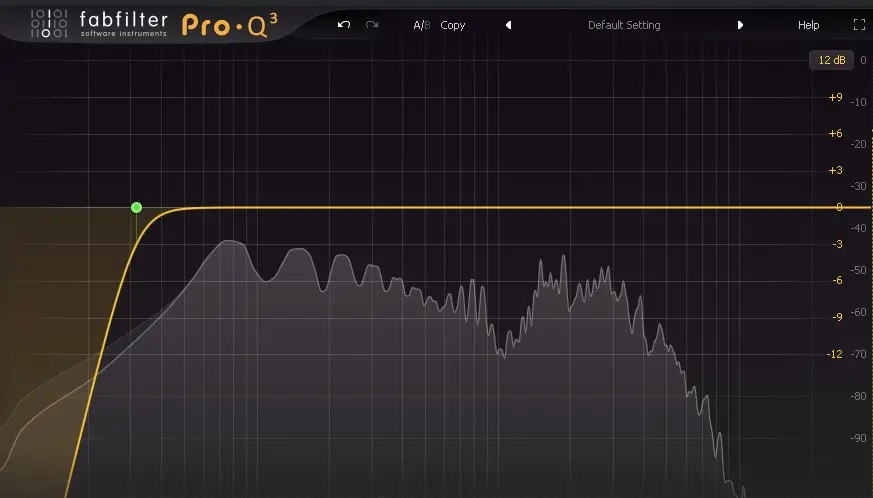
The low end is where pianos cause the most trouble in a mix.
The big low strings and the sustain pedal generate boom and rumble that cloud everything, so this is the first place to clean up.
Get it under control and the whole mix tightens.
- High-pass below 60 Hz: clear subsonic rumble, pedal thumps, and stage noise that add nothing.
- Tame boom at 100–200 Hz: a cut or low shelf tightens a boomy piano, while a little kept here holds the warmth.
- Go higher in busy mixes: if the piano is a background part competing with bass, high-pass up toward 100 Hz or more.
Be careful not to gut the low mids entirely, since a piano relies on them for body.
The goal is to control the boom, not hollow out the instrument.
Cut Boxiness and Honk
Once the low end is clean, the mids are where a piano sounds cluttered or hollow.
Boxiness gives it that canned, lifeless quality, and a nasal honk can make it sound cheap. Both are cuts, not boosts, and clearing them opens the tone instantly.
Sweep a narrow boost through 300–600 Hz to find the boxiest, most cardboard-sounding spot, then cut a few dB there.
This is the same boxiness that plagues other wood-bodied instruments, handled the same way it is in the acoustic guitar EQ guide.
If the piano sounds nasal or tinny, hunt for a ringing honk around 800 Hz to 1 kHz and dip it narrowly.
Add Presence and Air Without Harshness
The top end gives a piano clarity and sparkle, but it is also where the hammer attack turns harsh.
The trick is to add the good highs while controlling the clanky ones, so the piano shines without becoming brittle.
- Presence, 2–6 kHz: boost gently so the piano cuts through and the note attack reads.
- Hammer harshness, 6–10 kHz: cut if the attack is clanky or the recording is too bright.
- Air, 10 kHz+: a gentle high shelf adds shimmer and openness.
Tame the harsh attack first, then add the air shelf, so you are not amplifying the clank along with the sparkle.
As with most instruments, cut the bad highs before boosting the good ones.
Grand, Upright, and Digital Pianos
The instrument changes where the problems sit, even though the method stays the same. A concert grand, a small upright, and a digital piano each have their own character, so the emphasis shifts with the source.
- Grand piano: rich and full-range, so it usually needs the most boom and boxiness control to fit a dense mix.
- Upright piano: often boxier and more midrange-heavy, so lean harder on the 300–600 Hz cut.
- Digital and sampled piano: can sound hyped or brittle out of the box, so tame harshness and excess air rather than adding more.
Whatever the source, let your ears lead and balance the piano against the arrangement rather than chasing a fixed set of numbers.
Fit the Piano Around the Vocal
The piano and the lead vocal are a classic clash because both own the midrange and both can carry a song.
In a piano-and-vocal ballad especially, the piano has to give the voice room without disappearing. Complementary EQ is the fix.
Where the vocal needs presence around 2–4 kHz, dip the piano slightly so the voice sits on top, the same carving covered in the guide to EQing vocals.
When the piano is the only accompaniment, you can leave more of its presence and richness intact.
Always balance the two together rather than perfecting each alone.
3 Common Mistakes
A few habits keep pianos boomy and boxy. Avoid these, and the method above lands.
1. Boosting highs for clarity without cutting first. Adding air to a boomy, boxy piano just amplifies the problems.
Clear the low mids and tame the hammer attack first, then add the sparkle.
2. Over-cutting the low mids. The piano relies on 100–300 Hz for body, so scooping it too hard leaves a thin, lifeless tone.
Control the boom without removing the warmth.
3. EQing the piano without the vocal. A perfect solo piano tone often buries or clashes with the voice.
Carve the two around each other so the vocal stays clear.
Frequently Asked Questions
Quick answers to the questions that come up most when EQing piano.
What frequencies should I cut on piano?
The main cuts are the rumble below 60 Hz, the boom around 100–200 Hz, and the boxiness at 300–600 Hz.
High-pass to clear the lows, then sweep the low mids for the boxiest spot and dip it.
If the piano sounds nasal or tinny, cut a narrow honk around 800 Hz to 1 kHz. On bright or clanky recordings, also tame the hammer attack around 6–10 kHz.
What frequency is boxiness on piano?
Piano boxiness sits in the low mids, usually 300–600 Hz, with that hollow, canned quality often around 350–450 Hz.
Sweep a narrow boost through the range to find the boxiest spot, then cut a few dB there.
Clearing this band makes the piano sound clearer and more open without touching the highs, and it is one of the most reliable piano EQ moves.
How do you make a piano cut through a mix?
Boost the presence and attack range around 2–6 kHz so the note definition reads and add a gentle air shelf above 10 kHz for sparkle.
But clear the 300–600 Hz boxiness first, since presence added on top of mud just sounds harsh.
In a busy mix, also carve the piano around the vocal and other mid instruments so it has its own lane rather than fighting for one.
Where should you high-pass a piano?
High-pass around 60 Hz for a featured piano and higher, up toward 100 Hz or more, for a background part in a busy mix.
The low strings and sustain pedal generate rumble and boom that clutter the low end and clash with the bass.
Sweep the filter up while listening for the point where the piano starts to lose its warmth and weight, then back off slightly.
How do you EQ piano and vocals together?
Use complementary EQ in the shared midrange.
The piano and the lead vocal both want presence around 2–4 kHz, so where the vocal needs it, dip the piano slightly to open a lane for the voice.
When the piano is the only accompaniment, you can leave more of its richness intact.
Always balance the two together rather than perfecting the piano in solo.
Should you EQ a grand and upright piano differently?
The method is the same, but the emphasis shifts.
A grand is rich and full-range, so it usually needs more boom and boxiness control to fit a dense mix.
An upright is often boxier and more midrange-heavy, so lean harder on the 300–600 Hz cut.
Digital and sampled pianos can be hyped or brittle, so tame harshness and excess air rather than adding more on top.
The Bottom Line
Piano EQ comes down to controlling the widest-range instrument in the mix.
High-pass the rumble, tame the boom at 100–200 Hz, cut the 300–600 Hz boxiness, then add 2–6 kHz presence and a touch of air.
Adjust for the instrument, carve the piano around the vocal, and make the calls in the full mix.
Do that, and the piano sits warm, clear, and open instead of boomy and boxy.
The piano touches more of the frequency spectrum than almost anything else you will EQ, yet the decisions are the same everywhere.
The complete EQ guide lays out that underlying technique across the whole mix.
That is only the tonal half of the job. Level, compression, and effects are covered in the full piano mixing guide.