You spent an afternoon stacking harmonies. Thirds, fifths, a high part on the chorus, the works.
In your head it was going to sound like a choir wrapping around the lead. Instead, the mix turned into a cluttered mush.
You can hear every singer as a separate, slightly out-of-tune person, the midrange is a swamp, and the harmonies somehow make the lead sound worse instead of bigger.
So you start muting parts, and the song feels emptier with them gone too.
The missing piece is blending. Stacking the parts is recording. Making them sound like one rich instrument is mixing.
Blending vocal harmonies means treating the stack as a single, unified sound that supports the lead rather than competing with it.
It comes down to matched performances, smart panning, careful EQ and compression, and shared effects.
Run those moves in the right order, and the stack stops fighting the lead and starts carrying it.
TL;DR
- Blend first, process second. Matched tone, timing, and tuning do most of the work before any plugin.
- Edit tight and tune harder than the lead. Harmonies can take aggressive tuning because they hide inside the stack.
- Group the harmonies to a bus. Process and ride them as one unit, not one track at a time.
- Pan for width, keep them under the lead. Spread the parts and drop their level so they support.
- EQ and compress for cohesion. Carve space against the lead and compress harder to glue the stack.
- Share the lead’s reverb and delay. The same space pulls every part into one room.
Everything below follows that order: edit, tune, group, pan, EQ, compress, share the space. The cheat sheet and the three clutter traps sit at the bottom.
What Blending Actually Means
Blend is the difference between hearing a choir and hearing six separate singers.
When harmonies blend, the ear stops picking out individual voices and hears one full, layered sound built around the lead.
When they do not, every small mismatch in tone, timing, and pitch sticks out and clutters the mix.
Most of the blend is set before you touch a plugin. It starts at the source: similar microphones, similar tone, and consistent phrasing across the takes.
The closer the performances are to each other, the less work the mix has to do. Processing then tightens and glues what the performance already got close to.
That order matters.
If you reach for EQ and compression to fix a stack that was never matched in the first place, you end up fighting the recording instead of shaping it.
Get the performance and editing right, and the processing becomes the easy part.
Start With Tight Editing
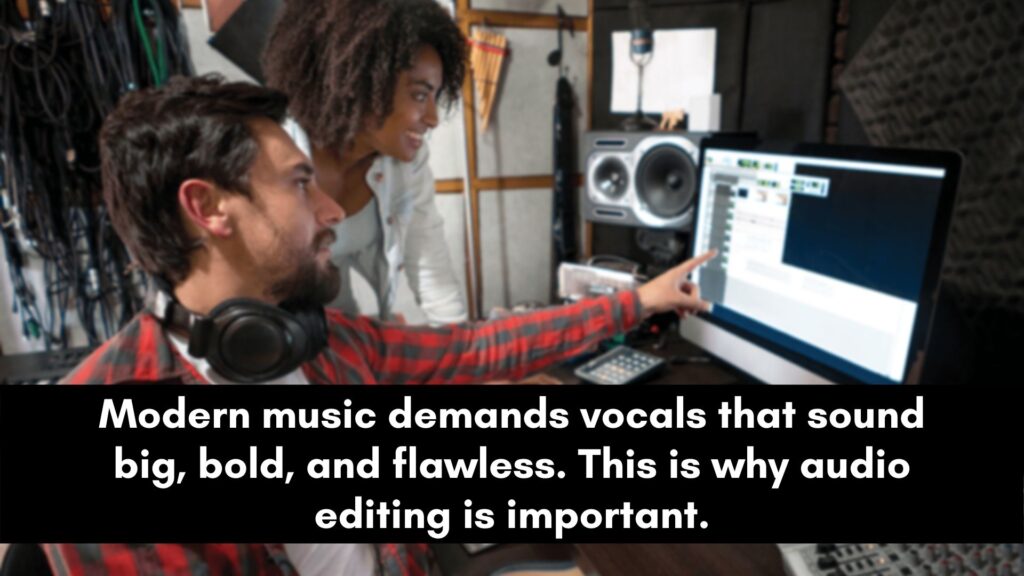
Editing is where blending really begins. Ragged timing is the fastest way to make a stack sound like a crowd instead of a unit.
The goal is to line up the parts without sucking the life out of them.
- Align to the lead. Tighten the harmony consonants and word endings to the lead vocal so the stack moves as one.
- Match the breaths and cutoffs. Sloppy, staggered word endings are a dead giveaway. Trim them so the parts release together.
- Keep some humanity. Do not quantize every syllable to the grid. Line up the obvious hits and leave the natural variation in between.
- Clean the gaps. Cut breaths and noise between phrases so the stack stays clean when it is compressed later.
Solid editing also makes every later stage easier.
The cleaner and tighter the stack is before processing, the less your EQ and compression have to fix afterward. Time spent here is never wasted.
To Tune or Not to Tune
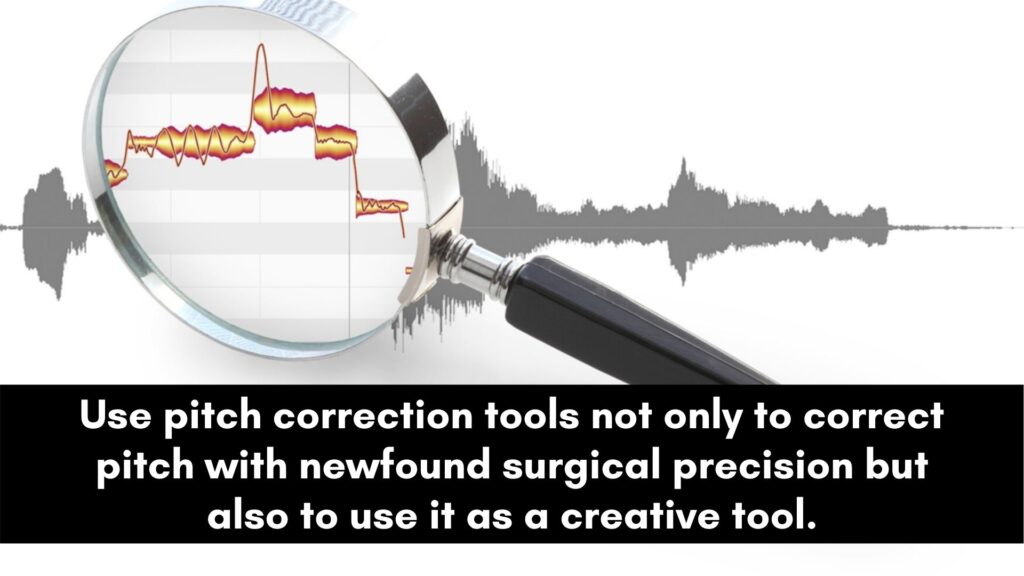
Harmonies almost always benefit from more tuning than the lead.
A small pitch wobble that sounds human on a solo lead becomes a clashing beat frequency when it is stacked against other parts.
Because harmonies hide inside the blend, you can tune them harder without the listener noticing the processing.
For modern pop, R&B, and rap, tune the harmonies tight so they lock to the lead and to each other.
For folk, rock, and organic styles, tune more gently and keep some natural movement.
Either way, in-tune harmonies actually help the lead sound more in tune too since the ear averages the stack.
Group the Stack to a Bus
Once the parts are edited and tuned, route every harmony to a single bus or group.
This is the move that lets you treat the stack as one instrument instead of a dozen separate faders.
It is faster, more consistent, and the key to a cohesive sound.
With the harmonies grouped, you can balance the internal levels first, then process and automate the whole stack together.
Gain-ride the group so the harmonies swell and pull back with the arrangement, louder in the big chorus, quieter under an intimate verse.
One fader move on the bus does what would take a dozen edits on the individual tracks.
Pan Harmonies for Width

Panning is what stops harmonies from piling up in the center and clogging the midrange.
Spreading the parts across the stereo field gives them room and makes the whole vocal feel wider, while the lead stays anchored in the middle.
Keep the placements symmetrical so the image stays balanced.
A spread stack is also the raw material for making vocals wide in a mix; the moves there start where this panning ends.
Work in matched pairs, for example a part at 40 percent left answered by one at 40 percent right.
The complete guide to panning vocals sorts out where every layer goes, doubles and background parts included.
The short version: spread the harmonies, mirror the sides, and pull them under the lead.
EQ to Carve Space

EQ on harmonies has one main job: keep them out of the lead’s way.
The lead vocal owns the front of the mix, so the harmonies should give up a little of the frequency range that makes the lead sound present and detailed.
Done right, the stack supports the lead without masking it.
- High-pass higher than the lead. Roll off the low end of the harmonies around 150–250 Hz to clear mud and midrange buildup.
- Dip the presence range. A gentle cut around 3–5 kHz on the harmonies leaves that band for the lead’s clarity.
- Treat the bus, not every track. EQ the harmony group so the whole stack sits consistently.
- Match tone where needed. If one part is too dark or bright, nudge it toward the others before processing the group.
Carving works from the lead’s side too, with mirror-image boosts where the stack has cuts.
That half of the job is the territory of how to EQ vocals like a pro.
Compress for Cohesion
Harmonies can take heavier compression than a lead vocal, and that is a good thing.
Aggressive compression on the harmony bus flattens the level differences between parts and between syllables.
This smooths timing inconsistencies and glues the stack into one solid block of sound. You are not after dynamics here. You are after consistency.
Compress the group rather than each track, aiming for more gain reduction than you would use on the lead.
A faster attack and a moderate ratio pull the parts together, and a second light compressor on the bus can glue further if needed.
The result is a stack that moves as one and sits steadily behind the lead. If the attack and ratio words are fuzzy, vocal compression is the primer to read first.
Blend With Reverb and Delay
Shared space is the final glue.
When the harmonies and the lead live in the same reverb and delay, the ear hears them as singers in one room rather than parts recorded separately.
Sending everything to the same effects is one of the simplest ways to make a stack cohesive.
Use the lead’s reverb and delay sends on the harmonies, often a touch wetter so they sit slightly further back.
Keep the tails controlled so the extra parts do not wash out the mix. The same space that makes the lead feel finished is what pulls the whole stack into one room.
Choosing that reverb in the first place (type, decay, pre-delay) is the subject of reverb on vocals.
Harmony Mixing Cheat Sheet
Here is the whole process in order. Work top to bottom, and remember that the early stages do most of the blending.
The processing settings are starting points to adjust by ear.
| Stage | Move | Starting point |
|---|---|---|
| Edit | Tighten timing to the lead | Align consonants and cutoffs, keep natural feel |
| Tune | Tune harder than the lead | Tight for pop/R&B, gentler for organic styles |
| Group | Bus all harmonies together | One group fader, gain-ride per section |
| Pan | Spread in matched pairs | 30–100% L & R, lead stays center |
| EQ | Carve space for the lead | HPF 150–250 Hz, dip 3–5 kHz |
| Compress | Glue for consistency | Heavier than the lead, fast attack |
| Effects | Share the lead’s space | Same reverb/delay, slightly wetter |
3 Common Mistakes With Vocal Harmonies
Most harmony problems trace back to the same few errors. Fix these and the stack falls into place behind the lead.
1. Harmonies too loud. Support parts that compete with the lead in volume pull focus away from the song.
Pull the stack down until you feel it more than you hear it, then ride it up only where the arrangement needs lift.
2. Leaving everything in the center. Stacking unpanned harmonies on top of the lead builds up the midrange and turns the mix to mush.
Spread the parts across the stereo field so each one has its own space.
3. Different effects on every part. When the lead and harmonies sit in different reverbs, they sound disconnected.
Send them to shared space so the whole vocal feels like one performance in one room.
Frequently Asked Questions
Most stack questions turn out to be about level, glue, or space. The six below cover all three, plus the tuning call that divides genres.
How loud should vocal harmonies be compared to the lead?
Harmonies should sit clearly below the lead, supporting it rather than competing.
A common starting point is several decibels under the lead, then adjust by section: louder and fuller in a big chorus, quieter under an intimate verse.
The goal is that muting the harmonies makes the mix feel empty, but they never pull attention away from the main melody.
Ride the harmony bus to taste.
Should you compress vocal harmonies more than the lead?
Usually yes. Heavier compression on the harmony bus flattens level and timing differences between parts, which glues them into one cohesive block behind the lead.
Because harmonies are support, you do not need to preserve their dynamics the way you do for the lead.
Compress the group rather than each track, using more gain reduction and a faster attack to pull the stack together.
How do you make harmonies blend with the lead vocal?
Start at the source with matched tone, timing, and tuning, since most of the blend happens before processing.
Then group the harmonies, pan them for width, EQ them to clear space for the lead, compress them for consistency, and send them to the same reverb and delay as the lead.
Shared space and matched performances are what make a stack sound like one unified instrument.
Should you tune vocal harmonies?
In most modern productions, yes, and often harder than the lead.
Small pitch differences that sound natural on a solo vocal create clashing beat frequencies when parts are stacked.
Because harmonies hide inside the blend, you can tune them tightly without the processing being obvious.
For folk, rock, and organic styles, tune more gently to keep natural movement, but still correct anything that clashes.
Where should you pan backing vocals and harmonies?
Pan harmonies out to the sides in matched pairs, while the lead stays centered.
A typical spread is 30 to 60 percent for harmonies and wider for doubles and background parts.
Keeping the left and right balanced prevents a lopsided image, and spreading the parts clears the midrange buildup that happens when everything stacks in the center.
Go wider in the chorus for impact.
Why do my harmonies sound cluttered?
Clutter usually comes from loose timing, no panning, and overlapping frequencies with the lead.
The parts pile up in the center, the midrange turns to mush, and small tuning differences clash.
Fix it by tightening the edits, tuning the stack, panning the parts apart, high-passing and dipping the presence range, and compressing the group for cohesion.
Matched performances and shared effects do the rest.
The Bottom Line
Great harmony mixing is mostly about order.
Match the performances, tighten the edits, tune the stack, then group it and treat it as one instrument with panning, EQ, compression, and shared space.
Keep the harmonies under the lead and let them swell where the song needs lift. Do that and a pile of takes becomes the big, full sound you heard in your head.
Harmonies are one layer of a much larger vocal production.
Where the stack sits relative to prep, lead processing, and effects is laid out in the complete vocal mixing guide.
Thank you – great tips! I especially like the idea of the fast attack compression to prevent the punchy transients in the harmonies.
Awesome, I’m glad that you found value in this tutorial. Your comment is much appreciated.