You have watched the tutorials and you know roughly where to cut and boost, but the stock EQ feels like it is fighting you.
The bands are clumsy, there is no dynamic option, and you keep wondering whether a real EQ plugin would finally make your vocals sound finished instead of just fine.
The right EQ plugin does make vocal work faster and cleaner, but not because it sounds like magic.
It is because the best ones hand you the exact tool for the job: surgical cutting, musical boosting, dynamic control, or analog character.
Here are the best EQ plugins for vocals, what each one is genuinely best at, and which to reach for first depending on the problem in front of you.
TL;DR
- Best all-rounder: FabFilter Pro-Q 4. Surgical, dynamic, and mid/side in one plugin.
- Best for harshness and resonance: oeksound soothe2.
- Best for air and presence: Maag Audio EQ4.
- Best budget dynamic EQ: Waves F6.
- Best analog character on a lead: Softube Curve Bender.
- You do not need all of them. One surgical EQ plus one character EQ covers almost every vocal.
Keep reading for the full breakdown, a side-by-side comparison, and which one to start with.
How to Choose the Right EQ Plugin for Vocals
Not all equalizers do the same job.
Some are built for clinical, surgical cuts; others add a flattering analog color you could never dial in with a clean digital EQ.
Before you buy anything, it helps to know which of four broad categories you actually need, because the right pick depends entirely on the problem you are solving.
Knowing how to EQ vocals like a pro matters far more than which plugin you own, so treat these as tools, not shortcuts.
- Surgical EQ: precise, narrow cuts to remove problem frequencies. Clean and transparent.
- Musical EQ: broad, flattering boosts that add tone, often modeled on classic analog units.
- Dynamic EQ: bands that only act when a frequency crosses a threshold, perfect for intermittent problems.
- Character EQ: colored, harmonic-rich processors that make a vocal sound expensive even when set flat.
Every plugin below has earned its place on real vocal mixes, not just a spec sheet.
The list spans clean digital workhorses, classic analog emulations, and dynamic tools, so there is a fit here whether you are chasing transparency, character, or control.
Where two plugins do a similar job, the entries call out which one suits which situation.
The Best Vocal EQ Plugins Compared
Here is the whole list at a glance before the detailed breakdowns.
Use it to spot the right category fast, then read the entry for the plugin that matches your need.
The tier column is a rough guide to price, not quality.
| Plugin | Type | Best for | Tier |
|---|---|---|---|
| FabFilter Pro-Q 4 | Surgical + dynamic | Precision and everyday EQ | Paid |
| Sonnox Oxford EQ | Surgical + musical | Cuts and boosts in one | Paid |
| Maag Audio EQ4 | Tonal (air) | Vocal air and presence | Paid |
| oeksound soothe2 | Dynamic resonance | Harshness and resonance | Paid |
| Pultec-style EQs | Passive tube | Warmth and shine | Paid |
| SSL Channel EQ | Console-style | Fast, musical tone | Paid |
| Waves F6 | Dynamic | Budget dynamic EQ | Budget |
| Softube Curve Bender | Analog character | Lead-vocal silk | Premium |
| Brainworx bx_digital V3 | Mid/side | Width and M/S control | Paid |
| Dangerous BAX EQ | Tonal balance | Gentle final polish | Premium |
FabFilter Pro-Q 4: The Best All-Round Vocal EQ
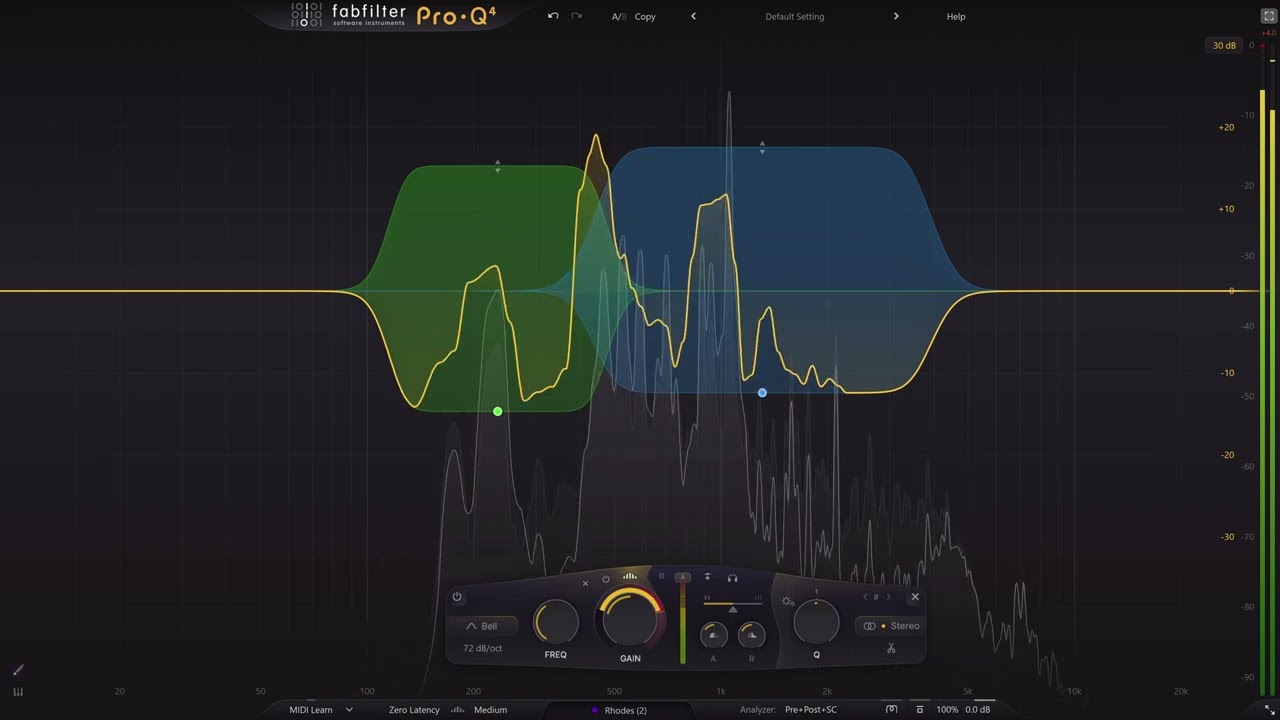
If you own one EQ for vocals, make it this one.
FabFilter Pro-Q 4 is the modern studio standard because it covers three jobs in a single plugin: clean surgical cuts, transparent boosts, and per-band dynamic EQ.
You get mid/side processing, multiple phase modes, a gorgeous spectrum analyzer, and the ability to grab a resonance and pull it down in seconds.
The only real knock is that its flexibility can tempt you into over-EQing, so the restraint is on you, not the plugin.
For vocals specifically, the dynamic bands are the headline feature.
You can tame harshness on the loud notes and duck sibilance without ever reaching for another plugin.
The workflow is so fast that it removes the friction between hearing a problem and fixing it.
Sonnox Oxford EQ: Surgical Precision With Musical Boosts
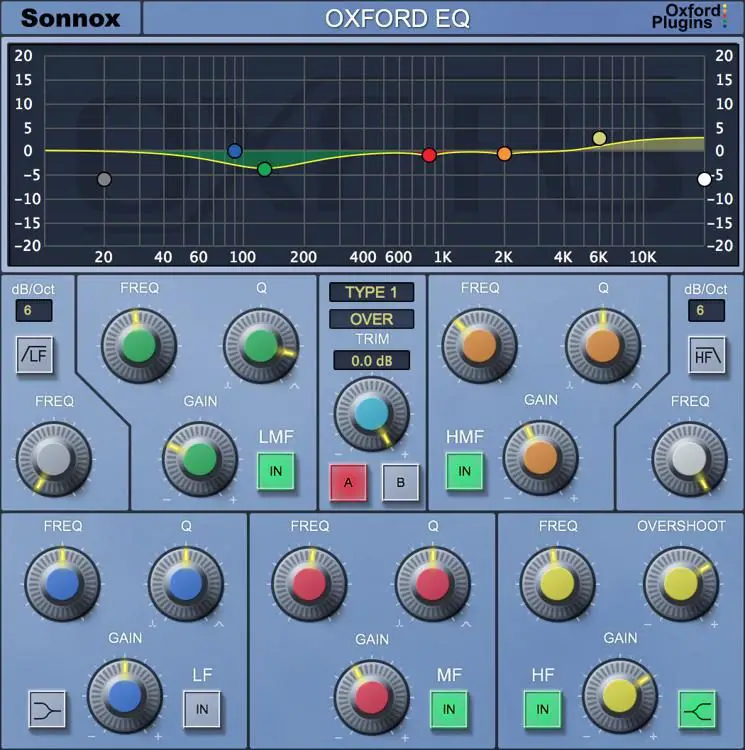
The Sonnox Oxford EQ is a favorite of mixing engineers who want one EQ that handles both correction and tone.
Its cuts are clean and surgical, but its boosts have a smooth, musical quality that many clinical digital EQs lack.
It also offers several EQ type curves, so you can switch the response to suit the source. It is not the flashiest interface on this list, but the sound is what keeps engineers loyal to it.
On a vocal, that combination means you can scoop out mud with a narrow cut and then add a flattering presence lift with the same plugin, without the boost sounding brittle.
It is a workhorse that does not draw attention to itself.
Download the Sonnox Oxford EQ here
Maag Audio EQ4: The Best EQ for Vocal Air
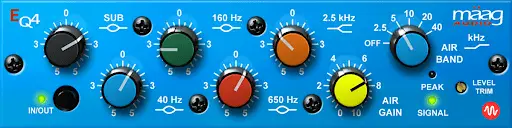
The Maag EQ4 is famous for one thing above all: its Air Band.
A high shelf centered far up at 40 kHz adds an open, silky top end to vocals that feels expensive and effortless, without the harshness a normal high shelf can introduce.
The rest of the controls are deliberately simple, fixed-frequency bands that encourage broad, confident moves.
Because it is so simple, it will not solve surgical problems, so pair it with a cleaner EQ for the corrective cuts.
This is the plugin you reach for when a vocal is clean but lifeless and needs sheen and presence. It is not a problem solver; it is a finisher.
Download the Maag Audio EQ4 here.
Oeksound soothe3: The Best Dynamic Resonance Suppressor
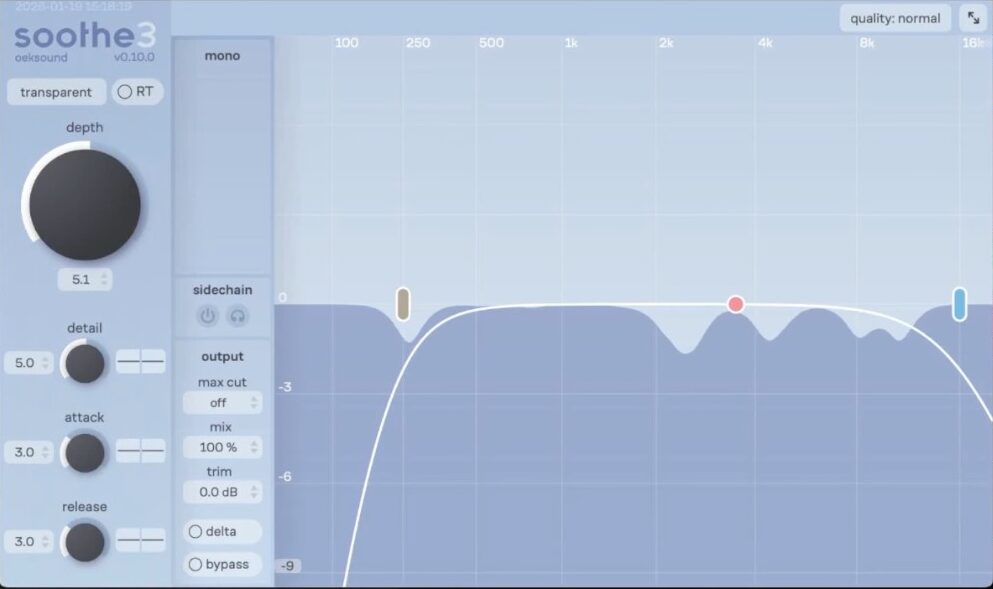
Soothe3 is not a traditional EQ, and that is exactly why it belongs here.
It listens to the signal in real time and automatically ducks harsh resonances as they appear.
That makes it the fastest way to tame harshness, sibilance, and boxiness on a vocal without manually hunting for every frequency.
Set the target range, dial the depth, and it does the surgical work for you.
Pushed too hard, it can dull a vocal, so keep the depth conservative and let it work only on the worst resonances.
It has become a near-default on lead vocals in modern mixes for good reason.
For a fuller breakdown of how it works and how to set it, see our soothe2 plugin review.
Pultec-Style EQs: Best for Warmth and Shine
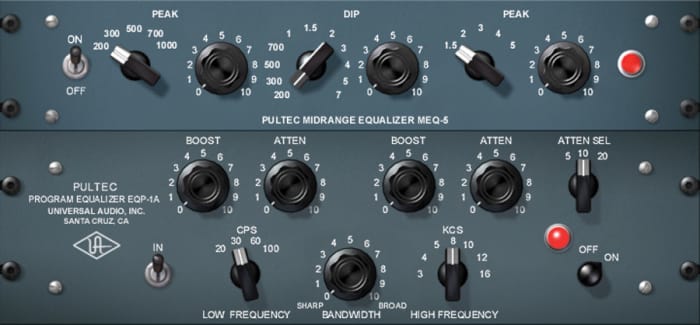
Pultec-style passive EQs add a warmth and weight that clean digital EQs simply cannot.
The signature move is the famous low-end trick, boosting and cutting the same low frequency at once for a full, rounded bottom that still sits cleanly in the mix.
Their broad, gentle curves and tube-driven harmonics flatter a vocal almost no matter what you do.
They are broad-stroke tools, not surgical ones, so reach for them to add vibe rather than to remove a specific problem frequency.
Several excellent emulations exist.
The Waves Puigtec EQs are an affordable way in, the UAD Pultec Passive EQ Collection is a gold-standard set.
The Softube Tube-Tech collection brings a slightly different flavor of the same passive magic.
SSL Channel EQ: The Best Console-Style EQ
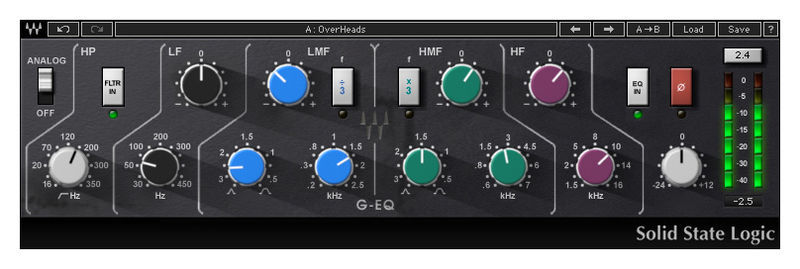
The SSL channel EQ is the sound of countless hit records.
It is a fast, four-band console-style EQ with a slightly aggressive character that suits vocals that need to cut through a dense mix.
Because it lives in a channel strip, you also get high-pass, dynamics, and tone shaping in one place, which makes it a quick, decisive tool rather than a surgical one.
If you need narrow, precise cuts, you will still want a dedicated surgical EQ alongside it.
Reach for it when you want a vocal to sound punchy and present without overthinking.
The UAD SSL 4000 E channel strip is a beautifully modeled option, and the SSL Native Channel Strip 2 runs natively on any system.
Waves F6: The Best Budget Dynamic EQ
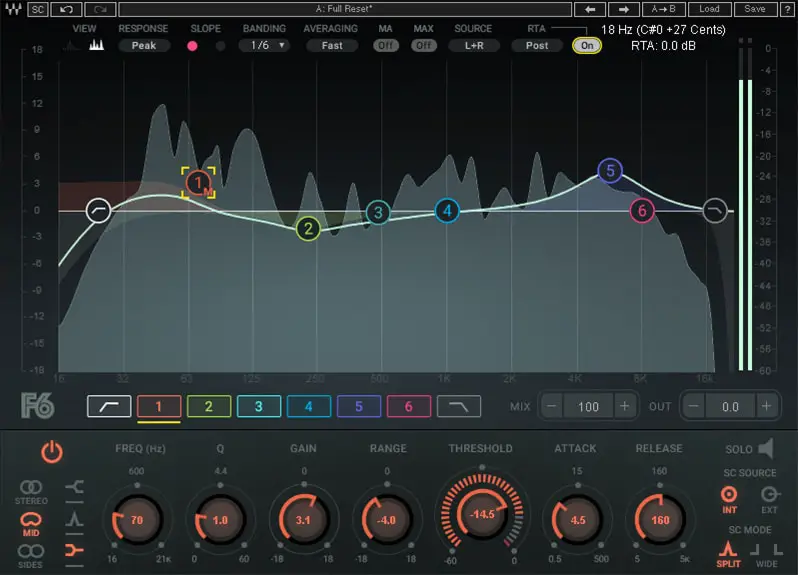
If you want dynamic EQ without the premium price, the Waves F6 is the value pick.
It gives you six floating bands, each with full dynamic control, plus a real-time analyzer and mid/side processing.
That is everything you need to tame sibilance, duck harshness on loud notes, and clear momentary mud on a vocal.
The interface is busier than the premium options, but the results hold up on professional mixes.
It is not as elegant as the high-end options, but it punches well above its price and goes on sale often.
For producers building a chain on a budget, it is the smart first dynamic EQ.
Softube Curve Bender: Silky Analog Character for Lead Vocals
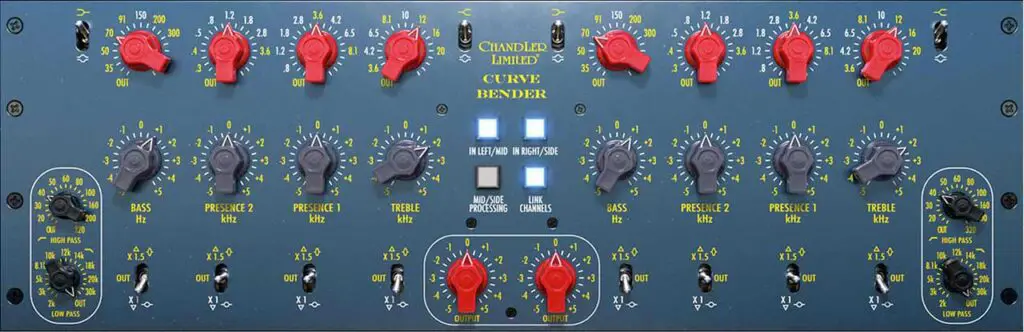
Based on the Chandler Limited Curve Bender, with EMI and Abbey Road heritage in its DNA, this is a character EQ for lead vocals that deserve to sound larger than life.
Its boosts are rich and silky, and even modest moves add a polished, finished quality.
This is not a corrective tool; it is the plugin you put on a vocal that is already good and you want to make great.
It is overkill on background vocals, so save it for the parts that carry the song.
It is a premium pick, so it earns its place on hero vocals rather than every track.
Download the Curve Bender here
Brainworx bx_digital V3: The Best Mid/Side EQ
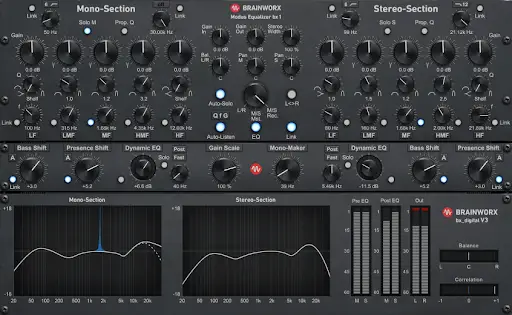
When you need to treat the center and the sides of a vocal separately, the bx_digital V3 is purpose-built for it.
Its mid/side processing lets you, for example, control harshness in the center of a doubled vocal while leaving the stereo width untouched or brighten the sides without making the lead piercing.
It also includes a mono-maker and an auto-listen feature that makes finding problem frequencies quick.
On a simple mono lead, it is more than you need, so keep it for stacks and stereo material.
It is more of a specialist than an everyday EQ, but for wide vocal stacks and stereo treatments, it is hard to beat.
Download the Brainworx bx_digital V3 here
Dangerous BAX EQ: Gentle Tonal Balancing
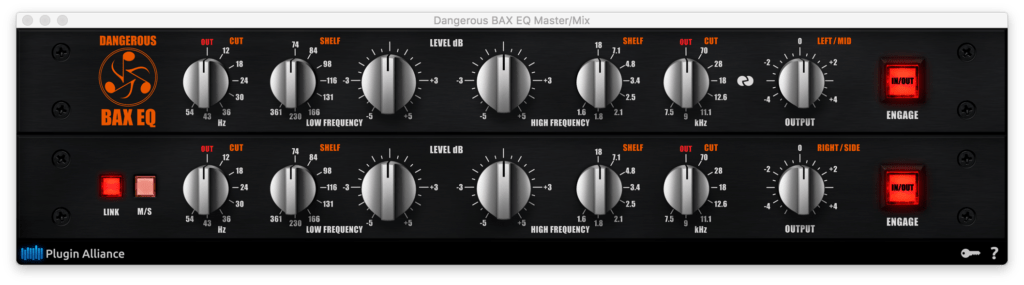
The Dangerous BAX EQ uses broad Baxandall curves to make gentle, sweeping tonal moves that always sound natural.
There are no narrow bands to get wrong, just smooth high and low shelves that tilt the overall balance of a vocal toward warmer or brighter.
It is the opposite of surgical, and that is the point.
Do not expect it to fix harshness or mud, because it is a balance tool, not a problem-solver.
Use it as a final polish on a vocal or a vocal bus when you want to nudge the whole tone without touching specific problems.
It is clean, transparent, and almost impossible to make sound bad.
Download the Dangerous BAX EQ here
Which Vocal EQ Plugin Should You Start With?
If you are building a vocal chain from scratch, you do not need ten EQs.
You need one surgical EQ and, eventually, one character EQ. Start with the tool that solves the most problems, then add color later.
- Buy first: FabFilter Pro-Q 4. It is surgical, musical, and dynamic in one, so it covers most vocal EQ on its own.
- Add for harshness: oeksound soothe2, the fastest fix for resonance and sibilance.
- Add for tone: a Pultec-style EQ or the Maag EQ4 once you want warmth and air.
- On a budget: the Waves F6 plus your DAW’s stock EQ will get you surprisingly far.
Frequently Asked Questions
The questions producers ask most when shopping for a vocal EQ, answered quickly.
What is the best EQ plugin for vocals?
For most people the best all-round choice is FabFilter Pro-Q 4, because it combines surgical cutting, musical boosting, and dynamic EQ in one fast workflow.
If your main problem is harshness or resonance, Oeksound Soothe3 is the better first buy.
The best plugin depends on the job: precision, tone, or dynamic control.
Do you need an expensive EQ plugin for good vocals?
No. Your DAW’s stock EQ can do clean, surgical work, and good technique matters far more than the brand of the plugin.
Premium EQs mainly buy you a faster workflow and analog character, not better fundamental results.
A budget dynamic EQ like the Waves F6 alongside your stock EQ covers most vocal needs.
What is the best free EQ plugin for vocals?
TDR Nova is the standout free option because it is a capable dynamic EQ that rivals some paid plugins.
Beyond that, the stock EQ in every modern DAW is genuinely good and handles high-passing, surgical cuts, and tonal boosts well.
Free tools are more than enough to learn on and to mix professional-sounding vocals.
What is the difference between surgical and character EQ?
A surgical EQ, like FabFilter Pro-Q 4, makes clean, precise cuts to remove problem frequencies without adding color.
A character EQ, like a Pultec-style unit or the Curve Bender, adds harmonic warmth and a flattering tone even when set flat.
Use surgical EQ to fix problems and character EQ to add vibe.
Is a dynamic EQ better than a static EQ for vocals?
Neither is better; they solve different problems.
A static EQ is best for constant tone, like a high-pass or a broad presence boost.
A dynamic EQ is best for intermittent problems, like harshness that only bites on loud notes or sibilance on certain words.
Most strong vocal chains use both.
How many EQ plugins do you actually need?
Two is plenty for most producers: one flexible surgical EQ for corrective work and one character or tonal EQ for color.
A dynamic EQ or a resonance suppressor like soothe2 is a worthwhile third.
Owning more than that is about taste and workflow, not about getting better results.
The Bottom Line
The best EQ plugin for vocals is the one that matches the problem in front of you.
For everyday precision, FabFilter Pro-Q 4 does almost everything. For harshness, soothe3.
For air and warmth, the Maag EQ4 and a Pultec-style EQ. Buy the surgical tool first, learn it well, and add character EQs as your ear develops, because technique always matters more than the plugin count.
A plugin is only as good as the moves you make with it.
The complete EQ guide shows how these tools fit the bigger picture across every instrument and core technique.
To get more out of whichever plugin you choose:
- How to use dynamic EQ on vocals (get the most from the dynamic bands in these plugins)
- Vocal EQ cheat sheet (the frequency targets to dial into any of them)
- Vocal de-essing (pair with soothe2 or the F6 to control sibilance)