Your toms sound massive on the solo’d hits and then turn into a boomy, ringing mess the moment the full kit plays.
The fills are muddy, the low toms clash with the kick, and the open tom mics are pumping kick and snare bleed into everything.
So you boost the attack to cut through, the boom gets worse, and the fills still disappear under the cymbals.
Toms are the trickiest piece of the kit to EQ, because they are big, resonant, and recorded with the most bleed.
Get the cleanup right and the EQ becomes simple.
This guide walks the full method.
You will learn the different targets for floor and rack toms, where the boom and boxiness hide, how to add punch and attack, and how to handle the bleed that makes tom EQ so messy.
TL;DR
- High-pass 50–100 Hz to clear sub rumble and make room for the kick.
- Floor toms: body around 80–120 Hz, attack around 5 kHz.
- Rack toms: body around 200–500 Hz, attack around 5–6 kHz.
- Cut 300–600 Hz to remove the boxy, woofy buildup.
- Control the bleed with gating or editing first, since open tom mics capture the whole kit.
Keep reading for the full method, a tom EQ cheat sheet, and how to tame the bleed that ruins most tom tracks.
Tom EQ Cheat Sheet
Here are the key tom frequencies in one place.
Toms vary more than any other drum, so treat these as starting points and sweep to confirm, since a big floor tom and a small rack tom sit in very different places.
For the whole kit at a glance, the drum EQ cheat sheet covers every piece.
| Frequency | What lives there | Move |
|---|---|---|
| 50–100 Hz | Sub rumble, kick overlap | High-pass to clean up |
| 80–120 Hz | Floor tom body and thump | Boost for weight |
| 200–500 Hz | Rack tom body and fullness | Boost for body |
| 300–600 Hz | Boxiness, woofy mud | Cut to clean up |
| 5–6 kHz | Stick attack, punch | Boost to cut through |
| 8–10 kHz | Sheen, air, shell ring detail | Gentle boost if dull |
Why Toms Are Tricky to EQ
Two things make toms harder than the rest of the kit.
First, they vary enormously in size and tuning, so there is no single set of numbers that works on every tom.
A 10-inch rack tom and an 18-inch floor tom are almost different instruments.
Second, tom mics are open for most of the song while the toms themselves only play during fills, so they capture a huge amount of kick, snare, and cymbal bleed.
Much of what sounds like a tom problem is actually bleed, which is why cleanup matters as much as EQ here.
Handle both, and the toms snap into focus.
Floor Tom Settings
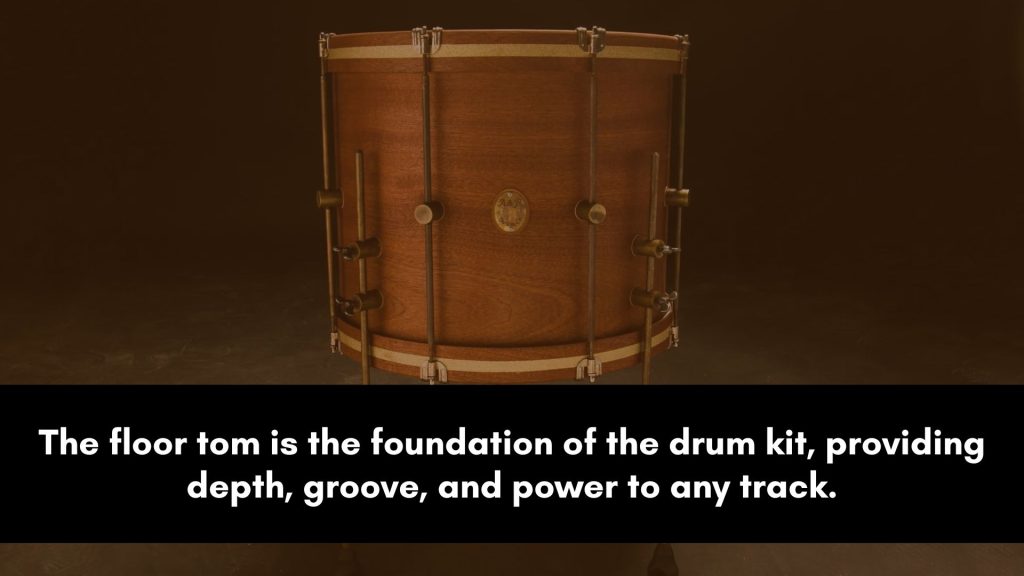
Floor toms live low, so the goal is deep weight without boom or clash with the kick.
The body and thump sit lower than people expect, and the boxiness sits just above, so a boost-and-cut pair does most of the work.
Add the attack on top so the fills read through the mix, up where the hi-hats and cymbals live.
- High-pass 50–70 Hz: clear sub-rumble and leave room for the kick.
- Boost 80–120 Hz: add the deep thump and weight.
- Cut 300–500 Hz: remove the woofy, boxy buildup.
- Boost around 5 kHz: bring out the stick attack so the floor tom cuts through.
Rack Tom Settings
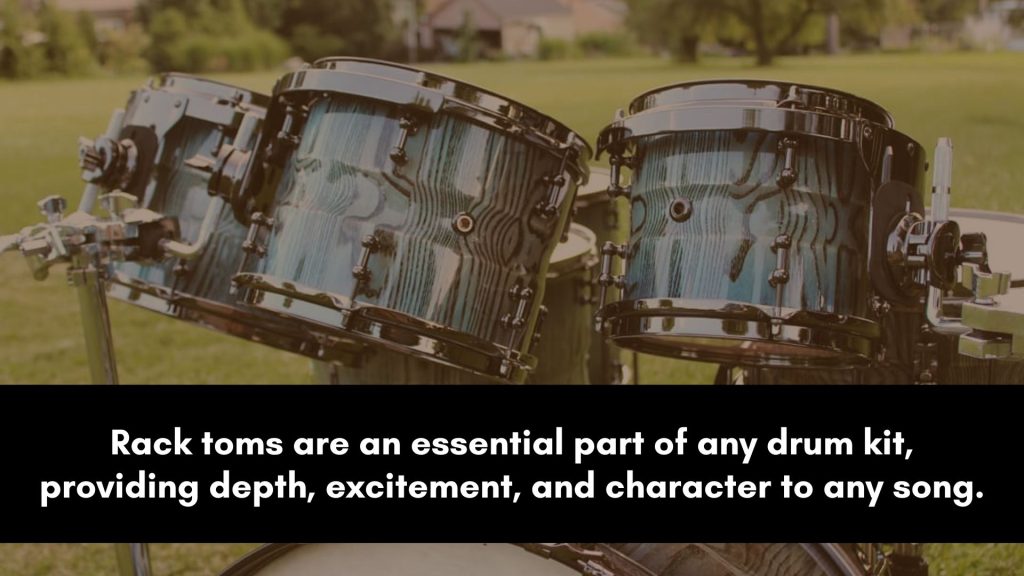
Rack toms sit higher, so their body lives in the low mids rather than the lows.
That puts the fundamental right in the muddy part of the mix, so the cut becomes as important as the boost.
It is the same low-mid box you fight on the snare. Otherwise, the approach mirrors the floor tom, just shifted up.
- High-pass 80–100 Hz: clear the lows the rack tom does not need.
- Boost around 200–500 Hz: add body and fullness around the fundamental.
- Cut around 600 Hz: remove boxiness if it sounds hollow or cardboard-like.
- Boost 5–6 kHz: add the attack and clarity that lets the fills speak.
Control the Bleed Before You EQ
This is the step that fixes most tom problems, and it is not EQ at all.
Because the mics sit open through the whole song, the tom tracks are full of kick, snare, and cymbal spill that muddies the kit even when no tom is playing.
Clean that up first, and the EQ has far less to fight.
Gate the toms or edit the tracks so they are only open during the actual fills, then high-pass firmly to remove the low-end bleed.
Pair this with the low-end work on the kick so the floor toms and the kick are not fighting for the same space.
With the bleed under control, the tom EQ you dial in actually sticks.
EQing Sample-Reinforced Toms
Many modern productions reinforce or replace toms with samples, since clean tom samples sidestep the bleed problem entirely.
When you blend a sample with the live tom, EQ them for different jobs rather than identically.
Use the sample for the consistent body and attack and the live mic for the natural tone and room feel, high-passing the live track hard so its bleed does not return.
If you are fully replacing the toms, EQ the sample like a clean tom using the ranges above, with far less corrective cutting needed.
Either way, keep the blend natural so the fills still sound like a real kit.
3 Common Mistakes
A few habits keep toms boomy and buried. Avoid these and the moves above land.
1. EQing before controlling the bleed. No amount of EQ fixes a tom track that is full of kick and cymbal spill.
Gate or edit the toms first, then shape what is actually a tom.
2. Using the same settings on floor and rack toms. Their fundamentals sit in different places, so identical EQ leaves one boomy and the other thin.
Treat each tom for its own size and tuning.
3. Boosting attack instead of cutting boom. A buried tom is usually too boxy, not short on attack.
Cut the 300–600 Hz mud first, and the punch you already have comes forward.
Frequently Asked Questions
Quick answers to the questions that come up most when EQing toms.
What frequency should I boost on toms?
It depends on the tom. Floor toms want a body boost around 80–120 Hz, while rack toms want body around 200–500 Hz, since their fundamentals sit higher.
For both, a boost around 5–6 kHz brings out the stick attack that helps fills cut through.
Sweep to find the exact fundamental on each drum because tom size and tuning move these targets more than on any other drum.
How do you get rid of boxiness on toms?
Tom boxiness lives in the low mids, usually 300–600 Hz.
Sweep a narrow boost through that range to find the most woofy, cardboard-sounding spot, then cut a few dB there.
This single cut opens up most toms more than any boost. Keep it fairly tight so you remove the box without draining the body the tom needs to sound full.
Why do my toms sound muddy in the mix?
Muddy toms are usually a bleed problem, not an EQ problem.
The open tom mics capture kick, snare, and cymbal spill all through the song, which piles up low-end mud across the kit.
Gate or edit the toms so they only play during fills, then high-pass firmly. Once the bleed is gone, a cut around 300–600 Hz clears any remaining boxiness.
Should you gate toms before EQ?
Usually yes. Because tom mics are open for the whole song but the toms only play during fills, gating or editing out the bleed is the most important step, and it makes the EQ far easier.
Gate first so you are only EQing the actual tom hits, then shape the tone. Some engineers edit the fills by hand instead of gating for more natural, reliable results.
Where should you high-pass toms?
High-pass floor toms around 50–70 Hz and rack toms around 80–100 Hz.
The goal is to remove sub rumble and reduce the kick bleed without thinning the tom’s body, so floor toms keep more low end than rack toms.
Push the filter up while listening for the point where the tom starts to lose weight, then back off.
Firm high-passing also helps the toms and the kick share the low end.
Do you EQ floor and rack toms differently?
Yes. Floor toms are larger and sit lower, so their body lives around 80–120 Hz, while rack toms are smaller with body up around 200–500 Hz.
Using one setting on both leaves the floor tom thin or the rack tom boomy.
Treat each tom for its own size and tuning, sweep to find its fundamental, and apply the same cut-the-box, boost-the-attack approach at the right frequencies for that drum.
The Bottom Line
Great tom EQ starts with controlling the bleed, then shaping each drum for its size.
Gate or edit first, high-pass the rumble, cut the 300–600 Hz boxiness, and boost the body and 5–6 kHz attack at the right spot for floor versus rack toms.
Make the calls in the full mix, and the fills land with punch and weight instead of boom and mud.
Dial in the toms and you have handled the fussiest EQ on the kit. The complete EQ guide carries the same cut-first, size-for-source thinking into every other track.
There is more to a great tom than frequency balance. Gating, compression, and the rest of the chain are covered in the full tom mixing guide.